Creating a Butterfly-Friendly Garden in Your Florida Backyard
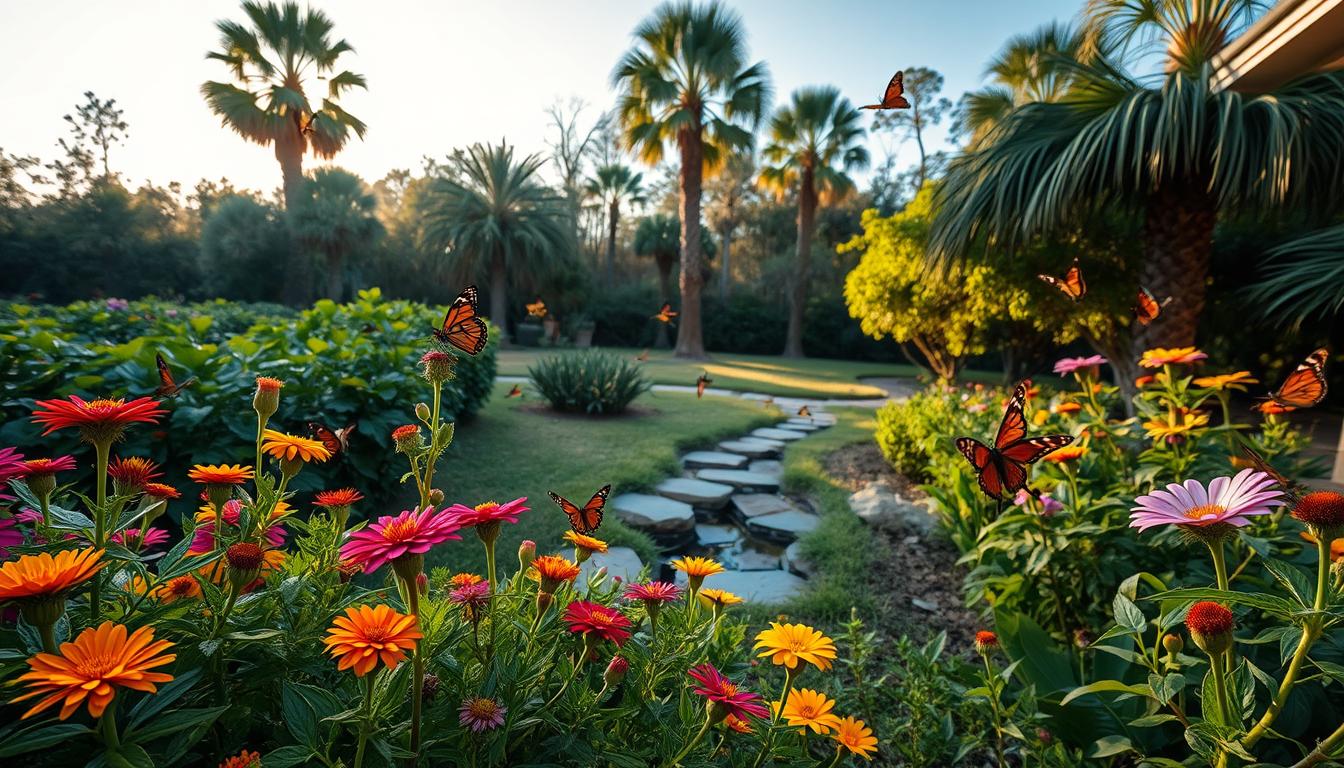
Turning your backyard into a butterfly haven is rewarding. It helps in their conservation and lets you enjoy their beauty. We’ll show you how to make a welcoming space for these lovely creatures.
Native plants are key in attracting butterflies. They offer nectar and host plants for caterpillars. Adding these plants to your garden creates a thriving habitat for butterflies.
With the right design and care, your garden can attract many butterfly species. This helps in their conservation efforts.
Why Florida Is Perfect for Butterfly Gardens
Florida is a paradise for butterfly lovers. It has over 200 species of butterflies. The state’s different ecosystems support a wide range of these beautiful creatures.
Florida’s Unique Butterfly Diversity
The state’s geography is a mix of tropical and temperate zones. This creates a perfect environment for many Florida native butterflies to thrive. This diversity is great for those who want to create butterfly-friendly gardens.
Climate Advantages for Year-Round Butterfly Activity
Florida’s subtropical climate means butterflies are active all year. This year-round butterfly activity is a big draw for nature lovers.
Conservation Impact of Home Gardens
Creating a butterfly-friendly garden helps conserve endangered butterflies in Florida. These gardens provide essential habitats for local butterfly species. They support their survival and well-being.
In conclusion, Florida’s unique biodiversity, climate, and conservation opportunities make it perfect for butterfly gardening. By understanding and using these advantages, residents can create vibrant habitats for these beautiful creatures.
Understanding Florida Native Butterflies
Florida’s subtropical climate is perfect for many native butterfly species. Knowing these butterflies helps create a garden that supports the local ecosystem.
Common Butterfly Species in Florida
Florida has a wide variety of butterflies. You’ll often see Monarchs, Gulf Fritillaries, and Zebra Longwings. These butterflies are not just beautiful; they also help pollinate and keep the ecosystem balanced.
Monarchs, Gulf Fritillaries, and Zebra Longwings
Monarchs have orange and black wings. Gulf Fritillaries are bright orange with silver spots. Zebra Longwings are known for their white and black stripes.
Swallowtails and Sulphurs
Other common species include Swallowtails and Sulphurs. Swallowtails have colorful patterns and long tails. Sulphurs are usually yellow or orange.
Butterfly Life Cycles and Needs
It’s important to understand the life cycles and needs of these butterflies. Each species needs specific host plants for their caterpillars and nectar sources for adults.
Endangered Butterflies in Florida
Some butterflies, like the Barred Yellow and the Florida Leafwing, are endangered. It’s vital to support their survival through habitat creation and protection.
Planning Your Butterfly Garden Florida Layout
A successful butterfly garden in Florida starts with a solid design plan. To create a welcoming space for these beautiful creatures, we need to consider several key factors.
Selecting the Ideal Location
The location of your butterfly garden is key. We must think about sun and wind protection when choosing a spot.
Sun Requirements and Wind Protection
Butterfly gardens need at least 6 hours of direct sunlight per day. Full sun to partial shade is ideal for most butterfly-friendly plants. Also, strong winds can damage plants and make flying hard for butterflies.
Space Considerations for Small and Large Yards
Whether your yard is small or large, you can create a butterfly-friendly garden. Small yards can use container gardens or vertical plantings. Larger yards offer more space for diverse habitats.
Creating Zones for Different Butterfly Activities
Different areas of the garden can support various butterfly activities. By creating zones for feeding, roosting, and breeding, we can attract more species.
Designing for Visual Appeal and Functionality
A well-designed butterfly garden is both beautiful and functional. Mixing plants with different heights, colors, and textures makes it inviting.
By following these guidelines, we can create a thriving butterfly garden in Florida. It will attract many species and provide a haven for these beautiful creatures.
Best Plants for Attracting Butterflies in Florida
To attract butterflies to your garden in Florida, pick the right plants. The right plants can draw in many butterfly species.
Native Nectar Plants for Adult Butterflies
Adult butterflies need nectar from flowers for energy. Native nectar plants are perfect because they fit Florida’s climate and soil.
Flowering Perennials for Florida’s Climate
Some great flowering perennials include:
Lantana, Pentas, and Butterfly Bush. These plants are not just pretty. They also offer a lot of nectar for adult butterflies.
Shrubs and Trees That Attract Butterflies
Shrubs and trees like Firebush and Coral Tree also attract butterflies. They give nectar and shelter.
Host Plants for Caterpillars
Host plants are key for butterfly caterpillars. Each species needs a specific host plant.
Milkweed Varieties for Monarchs
Monarch butterflies need Milkweed for their caterpillars. Planting Milkweed is vital for Monarchs.
Other Essential Host Plants
Other host plants include Passionflower for Gulf Fritillary and Dill for Black Swallowtail. Adding these plants helps support many butterfly species.
Year-Round Blooming Schedule
To keep butterflies coming all year, have plants that bloom at different times. This ensures a steady supply of nectar and host plants for caterpillars.
Essential Features for a Complete Butterfly Habitat
A complete butterfly habitat in Florida is more than just plants. It needs a thoughtful design with key features. These features support the life cycle of butterflies, beyond just flowers.
Water Sources and Puddling Areas
Butterflies drink water and use it to control their body temperature. A shallow water source, like a birdbath with fresh water and rocks, attracts them. Puddling areas are also vital for extracting minerals from damp soil. We can make these by creating a small depression in the ground and filling it with sand or mud.
Shelter and Sunning Spots
Butterflies need shelter from weather and predators. Native shrubs and trees provide this. They also warm their bodies in sunny spots. Leaving some areas open and unshaded is beneficial.
Protection from Predators and Elements
To protect butterflies, we can use natural barriers and windbreaks. Planting native vegetation in layers helps. Taller plants block harsh winds.
Natural Barriers and Windbreaks
Native plants create barriers against winds and predators. This protects butterflies and makes the garden welcoming.
Safe Spaces for Chrysalides
Safe spaces for chrysalides are also important. We can leave areas untidy with leaves and twigs. This provides hiding spots for chrysalides.
By adding these features to our Florida butterfly gardens, we support butterfly conservation efforts in Florida. Our gardens become havens for various species, making them truly special.
Maintaining Your Butterfly Garden
Keeping a butterfly garden in Florida needs careful attention and a dedication to welcoming these lovely creatures. By following a few easy tips, you can make sure your garden stays a butterfly paradise all year.
Seasonal Care Tips
Florida’s warm climate means your garden needs different care at different times. Knowing these seasonal needs is key to a healthy garden.
Spring and Summer Maintenance
In the spring and summer, your garden will be at its peak. Regular watering and fertilizing are vital for your plants’ health. Also, remove dead flowers to encourage more blooms and stop seeds from forming.
Fall and Winter Considerations
In the fall and winter, your garden needs less care. Yet, it’s important to clear away debris and protect plants from frost.
Eco-Friendly Pest Management
It’s vital to manage pests in your garden without harming butterflies. Use natural pest control like neem oil and introduce beneficial insects to keep your garden healthy.
Pruning and Plant Replacement Strategies
Regular pruning and replacing plants are essential for a beautiful garden. Prune your plants to keep their shape and promote new growth. Replace any plants that are struggling.
Connecting with Florida’s Butterfly Community
As we make our gardens friendly to butterflies, we can also connect with Florida’s butterfly community. Visiting butterfly sanctuaries lets us see these creatures up close. We learn from experts too.
Helping with butterfly conservation in Florida is a great way to help these creatures. Many groups work hard to save their habitats. We can help by volunteering or donating.
Joining local groups or attending workshops helps us share knowledge. We learn new things and stay updated on conservation. This helps both the butterflies and our gardening skills.