Top 10 Native Plants for a Thriving Pinellas County Garden
Creating a thriving garden in Pinellas County is rewarding. Choosing the right plants makes all the difference. We’re excited to share our top picks for durable and low-maintenance options that will make your garden flourish.
By choosing plants that are drought and heat tolerant, you’ll save water and help the local ecosystem. Our selection of native plants will add beauty and sustainability to your Tampa Bay lawn.
Let’s explore the best options for your garden. Discover how to incorporate them into your landscaping for a more sustainable environment.
The Benefits of Using Native Plants in Your Florida Landscape
Native plants are key to sustainable landscaping in Pinellas County. They bring many benefits. By choosing native plants, you make your garden more beautiful and help the local ecosystem.
Environmental Advantages of Going Native
Native plants are great for the environment. They grow well in our climate and soil, needing less water, fertilizer, and pesticides. This makes your garden better for the planet.
They also help local wildlife. This includes squirrels, songbirds, and pollinators. They provide food and shelter, boosting biodiversity in your area.
Economic Benefits for Homeowners
Native plants are good for your wallet too. They need less care, which saves you money. They’re made for our climate, so they don’t need as much water, pruning, or fertilizing.
Choosing native plants means you’re picking a smart, affordable choice. It’s good for you and the planet.
Native Plants Pinellas County: Understanding Our Local Ecosystem
To make a garden flourish, knowing the native plants of Pinellas County is key. This area on Florida’s Gulf Coast has a special environment. It supports many native plant species.
The Unique Climate and Soil Conditions of Florida’s Gulf Coast
The Gulf Coast has a subtropical climate. It has mild winters and hot, humid summers. The sandy soils and salty air also shape the gardening scene here.
Native plants have adapted to these conditions. They have deep roots to find water deep in the soil. This makes them more drought-resistant.
How Native Plants Support Local Wildlife and Biodiversity
Native plants are vital for local wildlife and biodiversity in Pinellas County. They offer food, shelter, and habitat for animals like birds, butterflies, bees, and more. Adding native plants to your garden makes it more beautiful and helps the ecosystem.
By using native plants’ unique traits, we can make gardens that are both stunning and sustainable. They support the local ecology and biodiversity.
Our Top 10 Native Plants for Pinellas County Gardens
Native plants are key to a healthy garden. We’re excited to share our top 10 picks for Pinellas County gardeners. These plants thrive in our local climate and soil, making them ideal for landscaping with native plants and gardening with native plants.
1. Firebush (Hamelia patens)
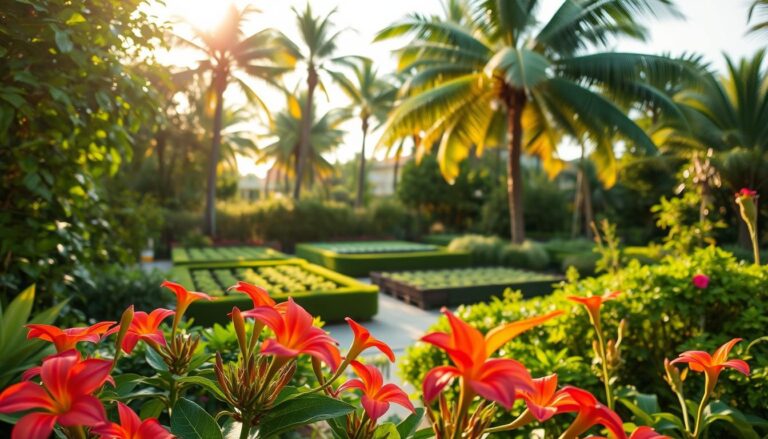
Firebush is a vibrant, hummingbird-attracting shrub. It adds color to your garden. It grows best in well-drained soil and full sun to partial shade.
Growing Requirements and Care Tips
Firebush needs regular watering but can handle some drought. It’s easy to care for and can be pruned in late winter for new growth.
Wildlife Benefits
This plant draws hummingbirds and butterflies, making your garden lively.
2. Coontie (Zamia integrifolia)
Coontie is an ancient, palm-like plant native to Florida. It adapts well to different lighting conditions.
Growing Requirements and Care Tips
Coontie prefers well-drained soil and can handle drought. It’s pest- and disease-free, making it great for easy gardens.
Wildlife Benefits
Coontie seeds are a vital food source for birds and small mammals.
3. Muhly Grass (Muhlenbergia capillaris)
Muhly Grass is a stunning, pink-plumed grass. It adds texture and movement to your garden. It grows best in full sun and well-drained soil.
Growing Requirements and Care Tips
This grass is low maintenance and drought-tolerant. Prune it in late winter for new growth.
Wildlife Benefits
Muhly Grass provides shelter and habitat for small animals and insects.
4. Beach Sunflower (Heliantha debilis)
Beach Sunflower is a bright, cheerful flower for coastal gardens. It thrives in full sun and well-drained soil.
Growing Requirements and Care Tips
This plant needs regular watering but can handle some salt spray. It’s low maintenance and can be used as a hedge or border.
Wildlife Benefits
Beach Sunflower attracts bees and butterflies.
5. Coral Honeysuckle (Lonicera sempervirens)
Coral Honeysuckle is a beautiful, climbing vine for trellises or arbors. It grows best in full sun to partial shade.
Growing Requirements and Care Tips
This vine needs regular watering and some pruning. It’s pest- and disease-free.
Wildlife Benefits
Coral Honeysuckle attracts hummingbirds and butterflies, adding life to your garden.
6. Saw Palmetto (Serenoa repens)
Saw Palmetto is a low-growing, shrub-like palm native to Florida. It adapts to various lighting conditions.
Growing Requirements and Care Tips
This plant is drought-tolerant and low maintenance. It’s great as a groundcover.
Wildlife Benefits
The berries of Saw Palmetto are a key food source for birds and small mammals.
7. Walter’s Viburnum (Viburnum obovatum)
Walter’s Viburnum is a versatile, evergreen shrub for hedges or borders. It thrives in different lighting conditions.
Growing Requirements and Care Tips
This shrub needs regular watering and pruning. It’s pest- and disease-free.
Wildlife Benefits
Walter’s Viburnum attracts pollinators and provides shelter for small animals.
8. Blanketflower (Gaillardia pulchella)
Blanketflower is a vibrant, daisy-like flower for adding color to your garden. It grows best in full sun and well-drained soil.
Growing Requirements and Care Tips
This plant needs regular watering but can handle some drought. It’s low maintenance and can be used as a cut flower.
Wildlife Benefits
Blanketflower attracts bees and butterflies.
9. Simpson’s Stopper (Myrcianthes fragrans)
Simpson’s Stopper is a beautiful, evergreen shrub native to Florida. It adapts to various lighting conditions.
Growing Requirements and Care Tips
This shrub needs regular watering and pruning. It’s pest- and disease-free.
Wildlife Benefits
The berries of Simpson’s Stopper are a vital food source for birds and small mammals.
10. Butterfly Weed (Asclepias tuberosa)
Butterfly Weed is a vibrant, milkweed plant for attracting butterflies and pollinators. It thrives in full sun and well-drained soil.
Growing Requirements and Care Tips
This plant needs regular watering but can handle some drought. It’s low maintenance and can be used as a cut flower.
Wildlife Benefits
Butterfly Weed is a vital food source for monarch butterfly caterpillars and attracts various pollinators.
Designing Your Native Plant Garden
With the right plants and a bit of creativity, you can make a stunning native plant garden. It will thrive in Pinellas County’s unique climate. A well-designed garden not only beautifies your outdoor space but also helps local wildlife and biodiversity.
Creating Attractive Plant Combinations
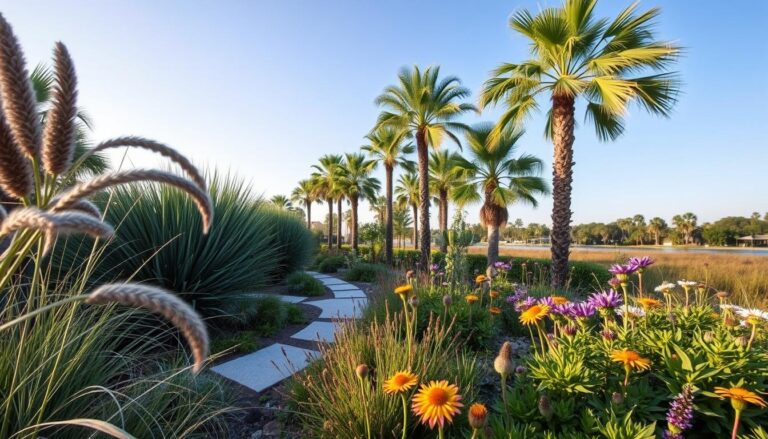
To make visually appealing plant combinations, pair plants with different textures, heights, and bloom times. For instance, mix the tall, feathery plumes of Muhly Grass with the bright flowers of Firebush for a striking contrast. Native plant landscaping ideas like these add depth and interest to your garden.
Seasonal Planning for Year-Round Interest
To keep your native plant garden interesting all year, plan for seasonal changes. Use plants that bloom at different times, like Coral Honeysuckle in spring and Butterfly Weed in summer. This will keep your garden colorful and attract many pollinators.
Where to Find Native Plants in Pinellas County
If you’re searching for native plant nurseries in Pinellas County, you have several options. Local nurseries and gardening clubs often have native plants for the area. You can also visit native plant sales or talk to local gardening experts to find the best plants for your garden.
Transform Your Yard into a Sustainable Florida Oasis
Adding native plants to your Pinellas County garden makes it more beautiful. It also helps the environment. Native plants cut down on upkeep and boost local wildlife.
Our guide showed the top 10 native plants for a great garden. We talked about creating a beautiful, green space. With the right plants, sustainable landscaping in Pinellas County is possible.
We urge you to turn your yard into a Florida oasis. Choose native plants that help local wildlife and lessen your environmental impact.