The Ultimate Guide to Gardening in Pinellas County’s Climate
Gardening in Pinellas County, Florida can be tough because of the weather. We have hot and humid summers, mild winters, and sometimes extreme weather like heavy rain and hurricanes.
Experts say it’s hard to keep plants alive in Florida’s heat. The weather changes a lot, with cold fronts, heavy rain, and hurricanes. To succeed, you need to know what plants need in this area and plan well.
We’ll show you how to garden well in this climate. We’ll help your outdoor space do great, no matter the weather.
Understanding Pinellas County’s Unique Climate
Pinellas County’s location on the Gulf Coast of Florida shapes its climate. It has mild winters and hot, humid summers. Knowing these conditions is key for gardening success here.
USDA Hardiness Zone and Microclimate Variations
Pinellas County is in USDA Hardiness Zones 10a and 10b. This means it can grow many plants. But, different parts of the county have their own climate. This affects what plants will grow best in your area.
Rainfall Patterns and Water Restrictions
Pinellas County has a wet and dry season. Most rain falls in the summer. It’s important to manage water well. Also, knowing about water restrictions helps save water. Using rain barrels is a good way to cut down on water use.
Managing Florida’s Heat and Humidity
Dealing with the heat and humidity is tough for gardeners here. High temperatures and humidity cause plants to lose water and get stressed.
Sun Exposure Considerations
Most plants need enough sun to grow well. But, Pinellas County’s strong sun can be too much. Providing shade for sensitive plants helps. Shade cloth or trees can offer natural shade.
Heat-Resistant Gardening Techniques
To fight the heat, we can use several methods. Mulch keeps soil moist, and watering during cooler times helps. Choosing plants that can handle the heat is also smart. These strategies help gardens thrive in Florida’s climate.
Best Plants for Gardening in Pinellas County FL
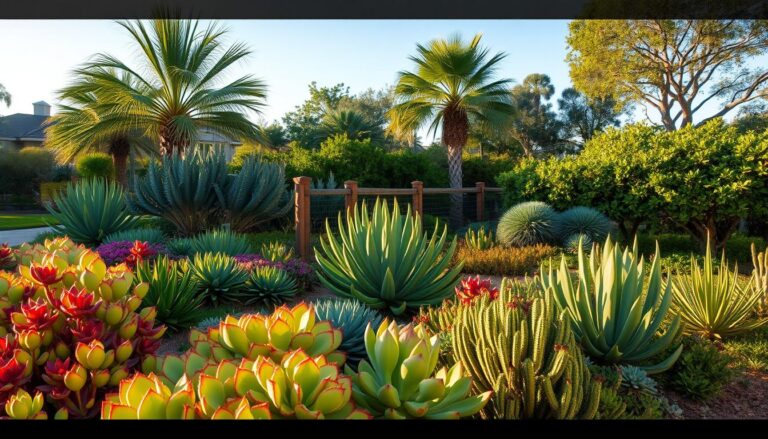
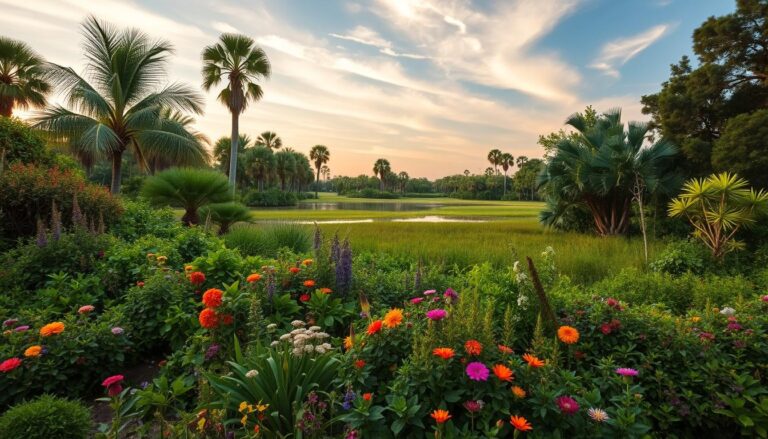
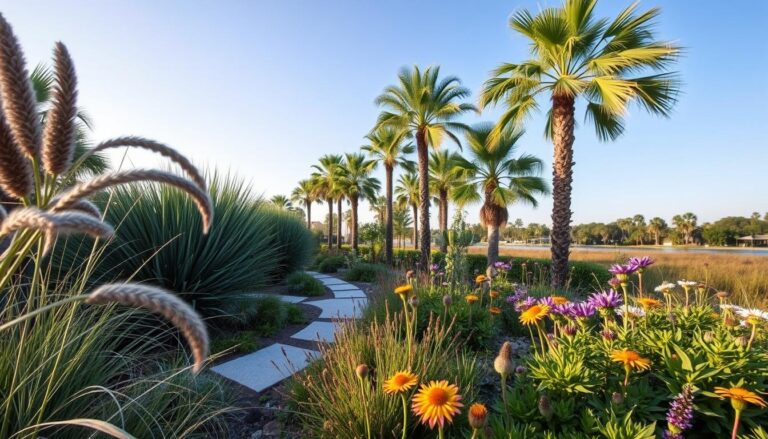
Gardening in Pinellas County, FL, is a great chance to grow many different plants. The area’s subtropical climate is perfect for a wide range of plants. You can grow native plants, vegetables, and beautiful flowers.
Native Florida Plants That Thrive Locally
Choosing native plants for your garden in Pinellas County is a smart move. They fit well with the local climate and soil. These plants need less care and are better at fighting pests and diseases.
Drought-Tolerant Native Options
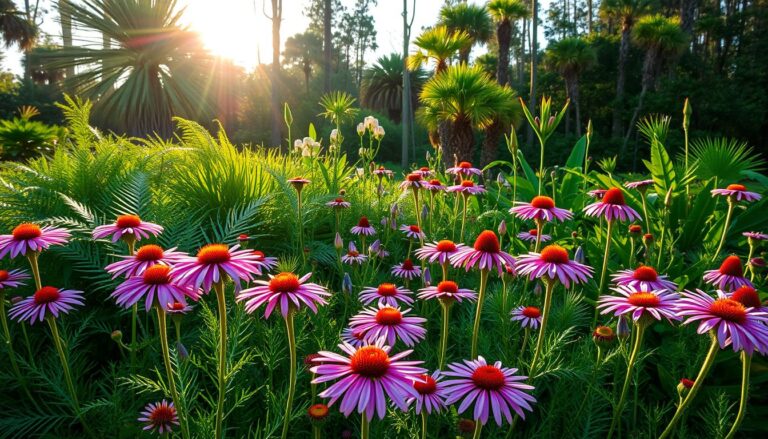
Some native plants in Pinellas County don’t need much water. Sunshine mimosas and black-eyed Susans are great examples. They add color to your garden and save water.
Wildlife-Friendly Plant Selections
Native plants that attract wildlife are also good for your garden. Firebushes, for example, draw hummingbirds and butterflies. Adding these plants makes your garden more lively and diverse.
Vegetables and Herbs for Year-Round Harvests
Pinellas County’s climate is perfect for growing vegetables and herbs all year. Tomatoes, peppers, and cucumbers do well in the warm weather. Herbs like basil, mint, and rosemary also thrive here.
As one gardening expert says,
“The key to a successful vegetable garden in Pinellas County is choosing varieties that are resistant to common pests and diseases in the area.
Ornamental Plants and Flowers for Colorful Gardens
If you want to brighten up your garden, Pinellas County has many options. Azaleas and bougainvillea are just a few examples. They add beauty and color to your garden.
Salt-Tolerant Plants for Coastal Properties
If you live by the coast, you’ll need plants that can handle salt. Beach sunflowers and sea lavender are great choices. They’re not just salt-tolerant but also add a special touch to coastal gardens.
By picking the right plants, you can have a beautiful garden all year in Pinellas County, FL.
Soil Preparation and Maintenance Techniques
Pinellas County gardeners know that soil preparation is key to a healthy garden. Good soil care boosts plant growth and helps the environment.
Understanding and Improving Sandy Florida Soils
Sandy soils in Florida drain fast but hold few nutrients. Adding organic matter like compost or manure helps. It makes the soil better, holds more water, and supports good microbes.
Composting in Pinellas County’s Climate
Composting is great for recycling waste and making soil better. In Pinellas County’s warm weather, compost piles break down fast. Keep a mix of “green” and “brown” materials and turn it often.
- Include kitchen scraps, grass clippings, and leaves.
- Maintain moisture, like a damp sponge.
- Monitor temperature to avoid overheating.
Mulching Strategies for Water Conservation
Mulching saves water and stops weeds. Organic mulches like wood chips or pine straw also feed the soil as they break down.
Fertilization Guidelines and Environmental Concerns
When fertilizing, balance plant needs with protecting the environment. Too much fertilizer can harm local waterways.
Reducing Fertilizer Runoff
To cut down on runoff, use fertilizers wisely. Think about organic alternatives. They give nutrients slowly, reducing the chance of too much fertilizer.
Organic Alternatives for Florida Gardens
Organic fertilizers like compost tea or fish emulsion are good choices. They feed plants and improve soil health. They’re a green option for Pinellas County gardeners.
Seasonal Gardening Calendar for Pinellas County
To get the most out of your garden in Pinellas County, knowing the seasons is key. The local weather brings its own set of challenges and chances for gardeners. Keeping up with these changes helps your garden stay healthy all year.
Spring Gardening Activities (March-May)
Spring is a perfect time to start planting in Pinellas County. The weather is nice, and many plants do well. Focus on these spring activities:
- Planting vegetables like tomatoes, peppers, and cucumbers
- Pruning shrubs and trees to keep them healthy
- Using fertilizers to help plants grow
Summer Garden Management (June-August)
Summer in Pinellas County is hot and humid, needing special care for your garden. Key things to remember include:
Hurricane Preparation for Gardens
Pinellas County faces hurricanes, so gardeners must prepare. Secure outdoor items, protect plants from wind, and have a plan for after the storm.
Dealing with Summer Pests and Diseases
Summer pests and diseases can be a problem. Check your plants often and use natural or integrated pest control.
Fall Planting Season (September-November)
Fall is great for planting in Pinellas County, with cooler weather and steady rain. Focus on these fall activities:
- Planting cool-season crops like broccoli, cauliflower, and kale
- Dividing and replanting perennials
- Using mulch to protect soil and plants from winter
Winter Garden Maintenance (December-February)
Winters in Pinellas County are mild, but there’s work to do. Tasks include:
- Protecting sensitive plants from cold
- Pruning deciduous trees and shrubs when they’re dormant
- Planning for the next gardening season
By following this calendar, Pinellas County gardeners can enjoy a vibrant garden all year. For more Pinellas County gardening tips, check out local gardening resources and experts.
Growing Your Gardening Knowledge in Pinellas County
As we wrap up our guide to gardening in Pinellas County, we urge you to keep learning. Join local gardening clubs like the Tampa Garden Club and the St. Pete Garden Club. These groups are great for meeting other gardeners, learning from experts, and keeping up with new gardening tips.
Don’t forget about gardening classes in Pinellas County, FL. The UF/IFAS Extension of Hillsborough County offers classes to improve your gardening skills. These classes can help you tackle challenges in our unique climate. Using these resources will make your gardening better and help you connect with the Pinellas County gardening community.
Keep in touch with local gardening groups and keep learning. This way, you’ll always know the latest in gardening trends and techniques. We hope this guide has been useful for you. We can’t wait to see your garden grow and flourish.