Landscaping Tips for Low-Maintenance Florida Yards
Creating a beautiful yard in Florida’s hot and humid climate can be tough. But, with the right strategies, homeowners can have a stunning outdoor space with little effort.
We know how key easy care garden design is in fighting local climate challenges. By picking the right plants, materials, and design, we can make a beautiful and green yard.
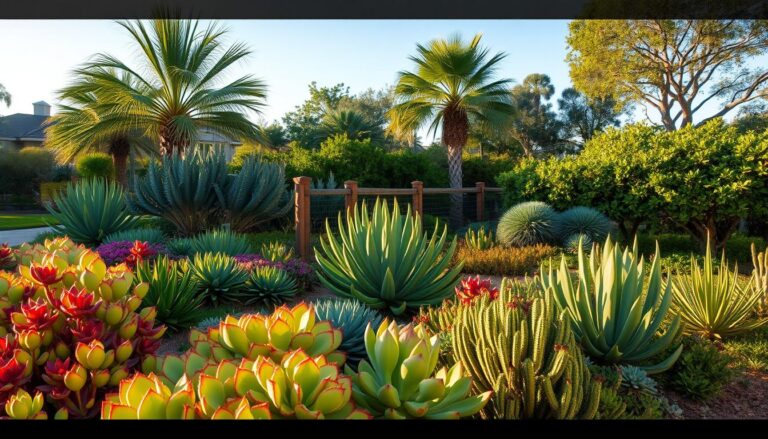
We aim to give homeowners useful tips on Low maintenance landscaping Florida. This includes choosing plants that don’t need much water, using mulch, and setting up efficient irrigation systems.
Understanding Florida’s Unique Landscaping Challenges
Florida’s hot and humid climate makes landscaping tricky. The subtropical weather is both stunning and tough. It’s key to know how to handle Florida’s landscaping needs.
Florida’s Climate and Soil Conditions
Florida’s weather is always warm and humid. The sandy soil and frequent rain make it hard to keep a yard looking good. Choosing plants that can handle these conditions is the way to go.
Common Maintenance Issues for Florida Yards
Florida yards often face problems like pests, soil erosion, and nutrient loss. These issues get worse because of the climate.
Heat and Humidity Concerns
The heat and humidity in Florida can cause:
- More pests and diseases
- Plants need more water
- Soil can erode and lose nutrients
Using native landscaping ideas can help. Native plants fit well with Florida’s weather and soil, needing less care.
Pest Management Challenges
Pest control is a big deal in Florida. Insects and rodents love the warm, humid weather. Native plants and smart pest control can help fight these pests.
Knowing how to tackle these challenges can lead to beautiful, easy-to-care-for yards in Florida.
Low Maintenance Landscaping Florida: Essential Planning Strategies
We can make a stunning Florida landscape with little upkeep by using the right planning. Good planning is key to a low-maintenance landscape that does well in Florida’s climate.
Assessing Your Yard’s Conditions
Before designing your low-maintenance landscape, it’s important to check your yard’s conditions. You need to know how much sunlight it gets and the soil type.
Sun Exposure Mapping
Sun exposure mapping is key to picking the right plants for your yard. Knowing the sun patterns helps us choose plants that fit the sunlight they get.
Soil Testing and Preparation
Soil testing is a vital step in assessing your yard. It helps us understand the soil’s pH level and nutrient content. This way, we can prepare it for the plants we want, ensuring they get the nutrients they need.
Creating Functional Zones
Creating functional zones is a smart way to design a low-maintenance landscape. By dividing your yard into areas for different activities, we can cut down on upkeep.
Designing for Minimal Upkeep
Designing for minimal upkeep means choosing the right plants and features that need less care. By using sustainable landscaping options and Florida-friendly yards principles, we can have a beautiful, eco-friendly landscape.
By following these essential planning strategies, we can enjoy a beautiful and easy-to-care-for Florida yard. It will make our outdoor living experience better.
Best Native Plants for Florida-Friendly Yards
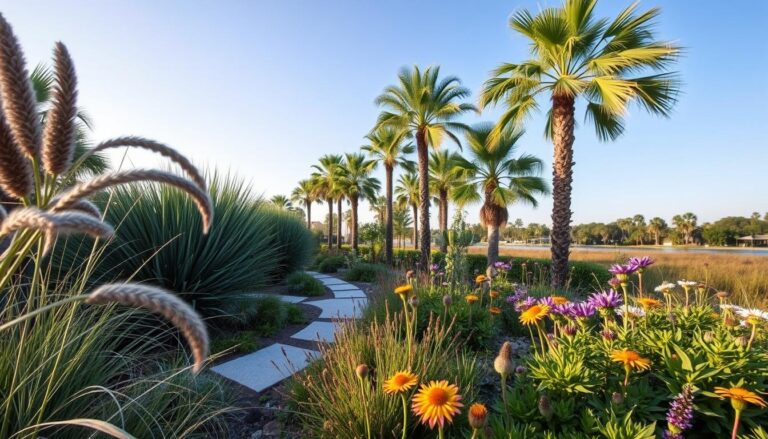
Native plants are key to a Florida-friendly yard. They are drought-tolerant and add vibrant colors. These plants fit well with Florida’s climate and soil, making them perfect for easy landscaping.
Drought-Tolerant Florida Native Trees
Florida’s native trees are stunning and tough. They handle the state’s hot and humid weather well. Here are some great options:
- Sabal Palm (Sabal palmetto), Florida’s state tree, is very drought-tolerant. It makes a beautiful landscape feature.
- Gumbo Limbo (Bursera simaruba) thrives in Florida’s climate. It offers shade and has an attractive bark.
- Cypress (Taxodium spp.) trees do well in wet or dry conditions. They’re great for different yard types.
Low-Maintenance Shrubs and Groundcovers
Native shrubs and groundcovers add color and texture with little care. Here are some top picks:
- Firebush (Hamelia patens) attracts hummingbirds and butterflies. It brings vibrant color to your garden.
- Coontie (Zamia pumila) is a low-growing, shade-tolerant groundcover. It’s perfect for areas under trees.
- Beach Sunflower (Heliantha debilis) is a drought-tolerant shrub. It produces bright yellow flowers, adding joy to your yard.
Florida Wildflowers for Easy Color
Florida wildflowers add color to your yard and support local ecosystems. They come in many colors and are easy to care for.
Seasonal Blooming Varieties
Some wildflowers bloom at different times, ensuring color all year. For example:
- Coreopsis (Coreopsis spp.) blooms in the spring. It offers yellow or pink flowers.
- Blanket Flower (Gaillardia pulchella) blooms in the summer. It has vibrant red and yellow petals.
Butterfly and Pollinator Gardens
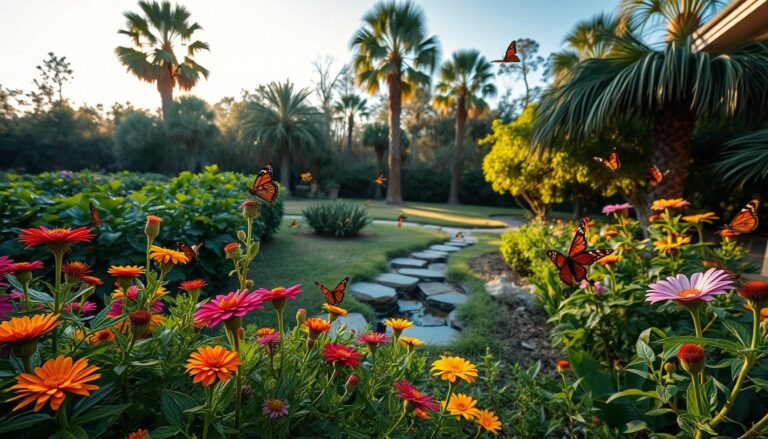
Plants that attract butterflies and pollinators beautify your yard and support the ecosystem. Some great choices include:
- Lantana (Lantana camara) is loved by butterflies. It comes in many colors.
- Butterfly Weed (Asclepias tuberosa) is a key food for monarch butterflies.
By using these native plants, you can create a stunning, low-maintenance outdoor space. It supports local wildlife and needs less water and care. This makes it a eco-friendly garden solution for your low upkeep outdoor space.
Water-Efficient Landscaping Strategies for Florida Homes
Florida’s climate makes smart landscaping choices key, like saving water. Homeowners can cut down water use with efficient strategies.
Smart Irrigation Systems
Smart irrigation systems are a top way to save water. They adjust watering based on weather, soil, and plant needs. This cuts down on waste and keeps plants healthy.
Key benefits of smart irrigation systems include:
- Reduced water consumption
- Lower water bills
- Healthier landscapes due to optimal watering
Rainwater Harvesting Techniques
Rainwater harvesting is another smart move. It collects rainwater for irrigation, cutting down on municipal water use. This also lessens stormwater runoff.
Simple rainwater harvesting techniques include:
- Installing rain barrels or cisterns
- Using the collected rainwater for irrigation
- Implementing a first flush device to divert initial roof runoff
Proper Mulching Practices
Mulching helps keep soil moist and cuts down on watering. It’s about picking the right mulch and using it right.
Organic vs. Inorganic Mulch Options
Organic mulches like wood chips and pine straw are great for Florida. They keep moisture, fight weeds, and control soil temperature. Inorganic mulches like gravel and stone work too, but might need weed barriers.
Application and Maintenance Tips
To get the most from mulching, apply it right and keep it up. Replenish mulch as needed and keep it a few inches from plant stems.
Using these strategies, Florida homeowners can save water and keep their outdoor spaces beautiful and easy to care for.
Sustainable Landscaping Options for Low-Upkeep Outdoor Spaces
To make a beautiful, easy-to-care-for yard in Florida, we need to use green landscaping. We can pick the right plants, materials, and methods. This way, we can help the planet while enjoying our outdoor areas.
Florida-Friendly Lawn Alternatives
Traditional lawns need a lot of work and use a lot of resources. Luckily, there are better options for Florida.
Bahia and Zoysia Grass Options
Bahia and Zoysia grass need less water and mowing than regular turf. Bahia grass is great for Florida’s weather, and Zoysia grass is softer to walk on.
Groundcover Alternatives to Traditional Turf
For a big change, try using groundcovers like Lilyturf or Dwarf Mondo Grass. These plants grow low and spread out, needing little care and doing well in many places.
Hardscaping and Decorative Stone Features
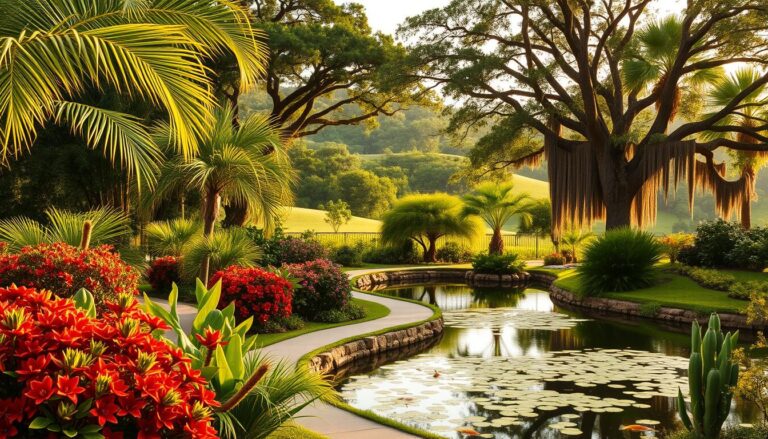
Adding hardscaping and decorative stone can make our outdoor spaces look better and work better. Patios, walkways, and walls are examples. They make our spaces look good and need little upkeep.
Eco-Friendly Garden Solutions
Using eco-friendly garden solutions is key to green landscaping. Practices like composting and natural pest control help us avoid harmful chemicals.
Composting Systems
Composting turns trash into soil that helps plants grow. Setting up a composting system can cut down on waste and make your garden more sustainable.
Natural Pest Control Methods
Instead of using chemicals, try natural ways to control pests. This includes using beneficial insects or keeping your garden clean. These methods help keep your garden healthy and balanced.
By using these green landscaping ideas, we can make beautiful, easy-to-care-for yards. These yards are good for our families and the planet.
Enjoying Your Beautiful Florida Yard with Minimal Effort
We can have a beautiful Florida yard with little effort. Choosing the right plants and using water wisely are key. These steps help us enjoy our outdoor space with less work.
Low maintenance landscaping in Florida means making smart choices. Native plants and eco-friendly solutions cut down on watering, pruning, and fertilizing. This saves time and helps our planet.
With the right approach, our Florida yard can be a haven without constant upkeep. Using water-efficient and sustainable practices, we create a space that’s both beautiful and functional. It brings us joy and relaxation.